

Introduction
In 2026, having a website is no longer enough.
Many businesses launched websites years ago, only to leave them untouched after going live. While the website technically exists, it is often outdated, slow, missing important information, and invisible to potential customers.
Today’s customers search online before making decisions. They compare businesses, read reviews, check services, view portfolios, and evaluate credibility within minutes. If your website is inactive, outdated, or difficult to use, customers often move on before contacting you.
An active website has become one of the most valuable business assets for generating trust, visibility, and long-term growth.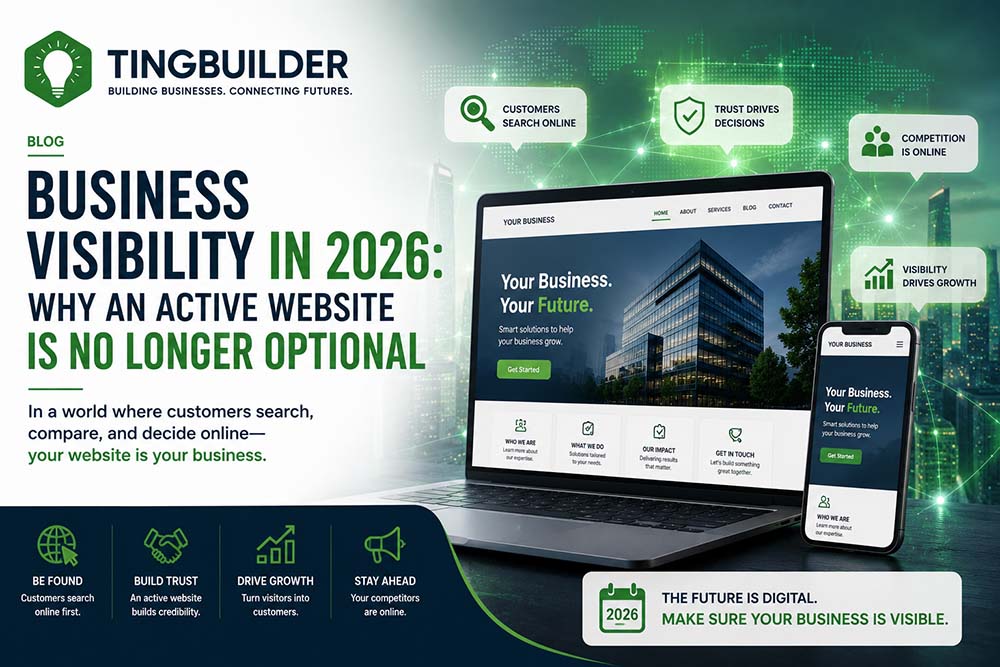
The Modern Customer Journey
Before contacting a business, customers typically perform several checks:
- Search Google for the company
- Visit the company website
- Review services and pricing
- Check social media activity
- Read customer testimonials
- Evaluate professionalism and trustworthiness
- Compare alternatives
In many industries, the first impression happens online long before a phone call or meeting takes place.
A business may provide exceptional services, but if its online presence appears outdated, potential customers may never discover that quality.
What Does “Business Visibility” Mean?
Business visibility is the ability for potential customers to find, understand, and trust your business online.
Visibility is created through multiple channels:
- Website presence
- Search engine rankings
- Google Business Profile
- Social media activity
- Customer reviews
- Industry listings
- Educational content
- Local search visibility
The website serves as the central hub that connects all these channels together.
Without a strong website, businesses often lose opportunities generated from marketing, advertising, referrals, and social media campaigns.
Why Active Websites Outperform Static Websites
Many businesses still operate with websites that were created several years ago and rarely updated.
An active website consistently evolves through:
- Fresh Content : Publishing useful articles, case studies, guides, and updates demonstrates expertise and signals activity to both customers and search engines.
- Updated Information : Services, contact details, portfolios, testimonials, and project showcases should remain current and accurate.
- Performance Improvements : Fast-loading websites create better user experiences and improve search visibility.
- Security Updates : Regular maintenance protects both the business and its customers from vulnerabilities and downtime.
- Ongoing Optimization : Businesses that continuously improve their websites often achieve better conversion rates and stronger customer engagement.
How Google Evaluates Websites in 2026
Search engines have become significantly smarter. Rather than focusing solely on keywords, modern search systems evaluate:
- Content quality
- User experience
- Expertise
- Trustworthiness
- Website performance
- Mobile usability
- Topical authority
- User engagement
Businesses that consistently publish valuable information build authority within their industries.
Over time, this authority increases organic visibility and generates qualified leads without relying entirely on advertising.
The Cost of an Inactive Website
An inactive website can create several hidden business costs:
- Lost Leads : Potential customers may leave before making contact if information appears outdated.
- Reduced Trust : Old content and broken pages can damage credibility.
- Poor Search Rankings : Search engines generally favor websites that remain active and useful.
- Lower Conversion Rates : Visitors may struggle to find information or complete desired actions.
- Competitive Disadvantage : Competitors who continuously improve their online presence gain visibility and market share.
The cost of maintaining an inactive website often exceeds the cost of improving it.
Beyond Websites: Building a Digital Presence Ecosystem
The most successful businesses in 2026 treat their website as part of a larger digital ecosystem.
A strong ecosystem includes:
- Website : The primary destination for information and lead generation.
- Search Visibility : Helping customers discover services when actively searching.
- Social Media : Creating awareness and engagement.
- Customer Reviews : Building trust and social proof.
- Educational Content : Demonstrating expertise and authority.
- Marketing Automation : Converting visitors into leads and customers efficiently.
When these components work together, businesses create a sustainable growth engine rather than relying on referrals alone.
What Businesses Should Focus on Today
If you are evaluating your online presence, start with these priorities:
- Ensure your website is mobile-friendly.
- Improve loading speed and performance.
- Update services and business information.
- Add recent customer testimonials.
- Publish educational content regularly.
- Improve search visibility through SEO.
- Maintain security and software updates.
- Track visitor behavior and conversions.
- Create clear calls-to-action.
- Review and improve the website continuously.
Small improvements made consistently often outperform large redesigns performed once every few years.
The Future Belongs to Visible Businesses
The internet has become more competitive, but it has also created more opportunities than ever before. Businesses that invest in visibility, credibility, and valuable content position themselves for long-term growth.
An active website is no longer just a digital brochure. It is a sales tool, trust-building platform, marketing engine, and business growth asset working around the clock.
The businesses that understand this shift will continue to attract customers, strengthen their brands, and outperform competitors throughout 2026 and beyond.
Final Thoughts
Every business wants more inquiries, more trust, and more opportunities. The question is not whether your business needs a website. The question is whether your website is actively helping your business grow.
A professionally maintained, regularly updated website remains one of the highest-return investments a business can make in today’s digital economy.
About TingBuilder
TingBuilder helps businesses build stronger digital foundations through websites, software solutions, automation, AI integration, and ongoing technology guidance. Our mission is to help organizations leverage technology effectively while creating measurable business growth.
Need help improving your business visibility?
Contact TingBuilder to discuss your website, digital presence, and growth strategy.